
Cambodia's mangrove forests represent some of Southeast Asia's most vital and biodiverse coastal ecosystems, and those near Kampot stand as remarkable gateways to understanding these extraordinary environments. These mysterious green cathedrals straddling the boundary between land and sea offer visitors an unparalleled opportunity to connect with nature while supporting crucial conservation efforts that protect both wildlife and local livelihoods along the coast.
The Enchanting Green Cathedral: Your Gateway to Mangrove Exploration
Imagine paddling silently through dense mangrove forests where the thick canopy creates a cathedral-like atmosphere, sunlight filtering through layers of intertwined branches and aerial roots. This is the experience that makes kayaking through Kampot's mangrove forests one of Southeast Asia's most immersive eco-tourism activities. The journey typically begins from Kampot town, where visitors travel by tuk-tuk to local community bases before embarking on their waterborne adventure through verdant waterways that seem untouched by time.
The most iconic route follows the Tuek Chhou River upstream to the "Green Cathedral," a stretch of mangrove where the foliage creates such a dense canopy that day becomes perpetually twilight. This particularly picturesque section takes between one and two hours to kayak and remains ideal for early morning bird watching. Advanced kayakers can venture further to the Pagoda Lagoon or tackle the more technical rapids at Teuk Chhou for a more adventurous experience.
Where to Experience Kampot's Mangroves: Key Destinations
Kampot's mangrove ecosystems revolve around several protected areas that have become essential for both nature conservation and community-based tourism. Trapeang Sangkae (also spelled Trapaing Sangke) stands out as the most accessible mangrove ecotourism destination, located approximately five to twelve kilometers from Kampot town along the road toward Kep. Established in 2014 with support from various civic organizations, this community-based tourism initiative now supports nearly 500 families living within a 57-hectare nature preserve that combines a traditional fishing village with mangrove reforestation efforts and tourist amenities.
The community has cultivated 48 hectares of mangrove forests at Trapeang Sangkae, with 28 hectares representing newly planted trees through their ongoing restoration projects. Visitors can stay in modest yet comfortable accommodation ranging from basic guestrooms ($10-$12 per night) to more comfortable seafront resorts, creating options for every traveler's budget and comfort level.
Further afield, the Peam Krasop Wildlife Sanctuary encompasses 23,750 hectares of mangrove forest in Koh Kong Province, making it Cambodia's largest expanse of mangrove ecosystems and one of mainland Southeast Asia's most substantial. The adjacent Koh Kapik Ramsar Site covers an additional 12,000 hectares. Together, these protected areas represent the country's most important mangrove habitat.
An Astonishing Richness of Life: The Biodiversity Beneath the Canopy
What makes Kampot's mangrove forests truly extraordinary is the staggering variety of life they support. Recent comprehensive biodiversity surveys conducted in the Peam Krasop and Koh Kapik areas revealed over 700 different animal species inhabiting these coastal forests—a figure scientists believe represents merely scratching the surface of the true diversity present.
The mangrove waters teem with juvenile fish species that will eventually support commercial fisheries feeding communities throughout the region. Surveys documented 74 distinct fish species, many of which are commercially vital for local fishers including barracudas, snappers, and groupers. Young seahorses, which appear as delicate jewels in the shallow waters, represent some of the ecosystem's most enchanting residents.
Beyond fish, these forests harbor an astounding array of wildlife. Bats represent one of the most diverse mammal groups, with at least 16 species confirmed in the Peam Krasop sanctuary alone. These creatures fill crucial roles in the ecosystem, dispersing seeds and controlling insect populations as they navigate the nighttime skies above the forest.
The mangrove forests also provide sanctuary for threatened mammals including the Sunda pangolin (critically endangered), long-tailed macaques (endangered), hairy-nosed otters (endangered), fishing cats (vulnerable), and large-spotted civets (endangered). Camera trap surveys have captured these elusive creatures going about their daily lives, proof that these forests remain vital strongholds for species facing extinction across Southeast Asia.
Birdwatchers find exceptional opportunities in the mangrove ecosystem. The Koh Kapik Ramsar Site serves as a crucial stopover point for migratory wading birds passing through Cambodia, making it an important bird area recognized by BirdLife International. The area hosts the critically endangered giant ibis, Cambodia's national bird, along with other threatened species including the white-shouldered ibis, various vulture species, and countless waterbirds that depend on the mangrove's protection and abundant food resources.
Nature's Climate Solution: Understanding Blue Carbon Ecosystems
Mangrove forests possess an almost superhuman capacity to combat climate change through what scientists call "blue carbon"—carbon stored in coastal ecosystems. These seemingly fragile environments store carbon at rates that dwarf tropical rainforests, sequestering up to four times more carbon than rainforests per unit area. Unlike terrestrial forests that store carbon primarily in biomass, mangroves trap carbon in their sediments where it can remain locked away for millennia, making them among the most powerful carbon sinks on the planet.
The mangrove root systems act as nature's infrastructure, stabilizing the seafloor while simultaneously filtering and purifying water. Their dense networks create natural barriers that absorb wave energy, protecting coastlines from erosion and reducing the devastating impacts of storm surges—protection increasingly valuable as climate change intensifies extreme weather events across Southeast Asia.
A Lifeline for Communities: Why Mangroves Matter to Local People
Beyond their ecological importance, Kampot's mangrove forests directly sustain the livelihoods of fishing communities that have inhabited these coastlines for generations. Approximately 75-80% of Cambodia's coastal population depends on fishing for survival, and mangrove ecosystems provide the nursery grounds that make this possible. Young fish sheltering among the mangrove roots grow to harvestable size before migrating to deeper waters, creating a natural harvesting system that has sustained communities for centuries.
The historical devastation of these forests illustrates their critical importance. Between 1989 and 2017, Cambodia lost approximately 42% of its total mangrove forests—an alarming rate of 1,415 hectares per year. Kampot Province experienced particularly severe losses, with 45% of its mangrove coverage destroyed during this period, primarily due to salt farming, charcoal production, shrimp aquaculture expansion, port development, and mining operations. The provinces of Kampot and Kep combined lost over 62% of their mangrove forests since 1992.
When mangroves disappear, fishing income plummets. Local communities report witnessing the direct correlation between mangrove loss and declining fish catches, forcing fishermen to either relocate entirely or switch to less profitable fishing methods. The loss extends beyond immediate economic hardship—without mangrove protection, coastal communities face increased vulnerability to typhoons and storm surges, threatening homes and lives during Cambodia's increasingly severe wet seasons.
Join the Restoration Movement: Contributing to Forest Recovery
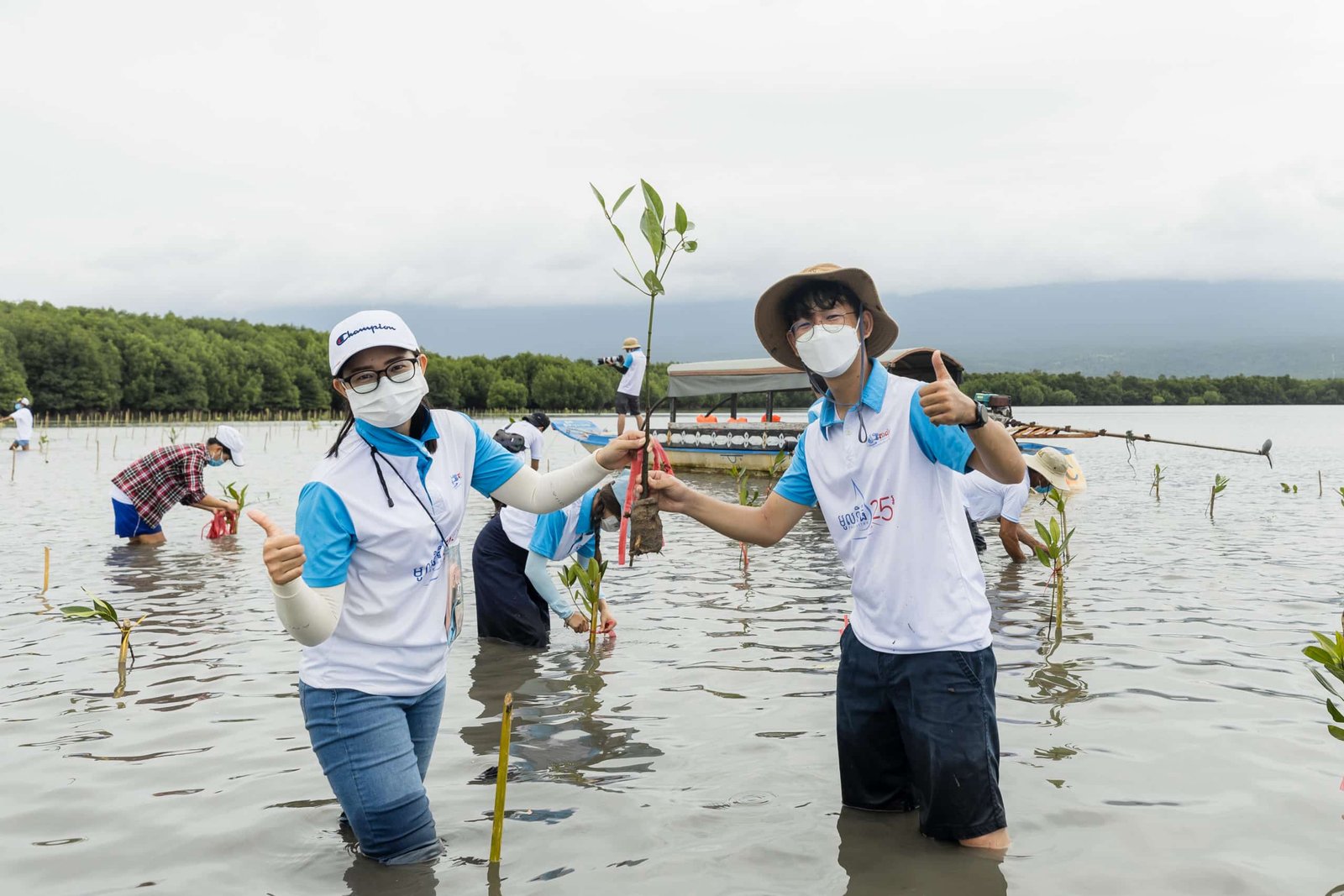
Recognizing these threats, community groups, international conservation organizations, and local authorities have launched ambitious restoration initiatives that allow visitors to become active participants in mangrove recovery. The Trapeang Sangkae community regularly organizes mangrove planting activities where both volunteers and tourists plant saplings that will mature into protective forest. These participatory programs represent one of the most meaningful ways visitors can directly contribute to environmental restoration while learning about mangrove ecology firsthand.
Major organizations including ActionAid Cambodia, the Cambodian Red Cross, and Fauna & Flora International work alongside community fisheries to restore degraded areas and establish new mangrove forests. The Cambodian Red Cross coordinated a recent mangrove planting event that brought together over 800 volunteers and 1,000 youth to restore Kampot's coastal areas. These efforts are not merely symbolic—restoration projects have demonstrated 80% survival rates for planted mangrove saplings, with projections to plant over 100,000 additional mangrove trees across the region.
Planning Your Mangrove Adventure: Seasons and Activities
Best Time to Visit: The dry season from November to February offers the most pleasant conditions for mangrove exploration. During these months, weather remains cool and comfortable, rainfall stays minimal, and outdoor activities proceed without disruption. Early mornings between 6-8 AM provide the finest birdwatching opportunities when wildlife proves most active and temperatures remain mild.
The wet season (May to October) brings heavier rainfall and higher humidity, potentially limiting outdoor activities. However, the abundance of water during this period attracts numerous migrating bird species, making it valuable for dedicated ornithologists willing to brave occasional storms.
Kayaking Tours: Half-day kayaking adventures departing from Kampot typically run from 8:30 AM, involving a short tuk-tuk journey to community bases where guides provide safety briefings and equipment checks. Tours generally span 2.5 to 3 hours of active paddling, with boats taking guests downstream to the river mouth for lunch featuring fresh seafood and spectacular sea views. Return journeys occur by motorboat, eliminating the strenuous paddle back upstream.
Mangrove Planting Experiences: Community organizations offer mangrove planting opportunities year-round, with organized events typically scheduled for weekends or specific conservation initiatives. Participants work alongside local guides who explain mangrove ecology while helping plant seedlings in designated restoration areas. These activities usually last 3-4 hours and cost between $5-$15 per person.
Stand-Up Paddleboarding (SUP) Tours: For those seeking alternative perspectives, SUP tours through the mangrove forests provide a gentler paddling experience suitable for families with children. These tours emphasize learning about local communities and conservation projects while offering opportunities for refreshing river swims during breaks.
Boardwalk Exploration: Several locations now feature constructed boardwalks allowing pedestrian access through mangrove forests without requiring boat transportation. These walkways include elevated platforms, suspension bridges, and observation towers providing panoramic views across the forest expanse—ideal for visitors with mobility considerations or those preferring dry exploration.
Responsible Mangrove Tourism: Visiting Sustainably
Selecting tourism operators genuinely committed to environmental conservation ensures your visit generates positive impacts. Look for operators partnering with local communities, employing local guides, and contributing portions of fees directly to restoration projects. The most reputable mangrove tourism businesses maintain strict capacity limits, follow established safety protocols, and emphasize minimal-impact wildlife observation practices.
Respect for local communities remains paramount. Guides often share personal stories of how mangrove loss affected their families and livelihoods—these conversations foster deeper understanding of why mangrove conservation matters beyond abstract environmental concerns. Photographing community members requires respectful permission-seeking, and purchasing local handicrafts or meals supports direct economic benefits flowing to residents.
The Bigger Picture: Understanding Coastal Ecosystem Interconnections
Mangrove forests do not exist in isolation but form part of a broader coastal ecosystem including coral reefs, seagrass meadows, and tidal marshes. These interconnected habitats create the intricate web of life sustaining Cambodia's marine resources. Understanding these relationships reveals why protecting mangroves extends benefits far beyond the forest's physical boundaries—healthy mangroves support ocean ecosystems that feed millions.
The mangroves of Kampot represent living laboratories demonstrating nature's resilience when given protection and restoration support. Where mangroves have been replanted and protected, fish populations recover, bird species return, and community incomes stabilize. These success stories offer hope amid concerning environmental trends, showing that ecological damage can be reversed through sustained commitment to conservation.
Experience the Magic of Kampot's Mangrove Ecosystems
Whether paddling through the mystical Green Cathedral, planting saplings alongside local conservationists, or simply watching sunrise from an observation tower overlooking endless green forest, mangrove exploration in Kampot offers experiences that reconnect visitors with the natural world while supporting vital conservation efforts. These extraordinary ecosystems represent the intersection of human and natural systems working in harmony—places where economic development, environmental protection, and wildlife conservation align toward shared prosperity.
Your visit to Kampot's mangrove forests contributes directly to their future survival. Every tour booking supports guides and community members who depend on ecotourism revenue. Every mangrove seedling planted becomes a permanent contribution to coastal protection and carbon sequestration. Every authentic story shared by local fishers increases awareness about why these humble yet magnificent forests deserve protection.
Ready to explore Cambodia's most enchanting coastal ecosystems? Experience the tranquility of the Green Cathedral, witness extraordinary wildlife, and become part of the movement restoring these vital mangrove forests. Book your mangrove adventure today and discover why these "coastal forests" represent the green heartbeat of Cambodia's marine world. The mangroves await—bring your sense of wonder and willingness to support conservation.
