
Step into the beating heart of Kampot, where the rhythm of daily life pulses through vibrant markets filled with the freshest catch from the Kampot River, mountains of tropical produce, and the unmistakable aroma of the world's finest pepper. This riverside town in southern Cambodia has preserved something increasingly rare in Southeast Asia: authentic market culture that remains largely untouched by mass tourism, offering travelers a genuine glimpse into Khmer daily life.
Fresh seafood and colorful vegetables at Kampot's Central Market, showcasing authentic local produce and market life
The Soul of Kampot Revealed Through Its Markets
Wandering through Kampot's markets isn't just about shopping. It's about immersing yourself in a centuries-old tradition where locals gather before dawn to secure the freshest ingredients, where vendors have occupied the same spots for generations, and where the art of conversation matters as much as the transaction itself. Unlike the sanitized tourist markets found in larger cities, Kampot's marketplaces remain wonderfully authentic, serving the local community first and welcoming curious travelers as honored guests.
The markets here tell the story of Cambodia's resilience and cultural richness. From the French colonial architecture housing some market buildings to the traditional Khmer methods of displaying goods, every corner offers a visual feast. The sights range from fishermen unloading their morning catch to elderly women carefully arranging tropical fruits in perfect pyramids, each scene a testament to the enduring importance of these communal spaces.
Central Market: Where Kampot Comes Alive
Known locally as Phsar Samaki, the Central Market stands as Kampot's commercial heart, located near the famous Durian Roundabout where a giant sculpture of the pungent fruit pays homage to the region's agricultural heritage. This sprawling complex buzzes with activity from early morning until late afternoon, offering everything a household could possibly need under one roof.
The market's architecture tells its own story, with a covered central area branching into multiple sections, each dedicated to specific goods. The produce section explodes with color, showcasing the incredible bounty of Cambodia's fertile land. Pyramids of dragon fruit sit beside mountains of mangosteen, while vendors arrange green mangoes, papayas, and the infamous durian with practiced precision. The vegetable displays feature an array unfamiliar to many Western visitors, from morning glory stems to banana blossoms, alongside familiar favorites like tomatoes, cucumbers, and fresh herbs.
A local Kampot market vendor preparing fresh vegetables amidst a vibrant display of produce at Kampot Central Market
Walking deeper into the market, the seafood section reveals Kampot's connection to the nearby coast and river systems. Vendors display their catches in metal bowls filled with water, ensuring maximum freshness. Live fish swim in plastic bins, while crabs wave their claws at passing shoppers. Squid, prawns, and various shellfish glisten on ice, accompanied by the melodic calls of vendors announcing their prices and quality. The morning hours, particularly between eight and ten, offer the best selection as fishermen arrive with their overnight and early morning catches.
The meat section operates with a directness that might surprise visitors from Western countries. Whole chickens hang alongside cuts of pork and beef, all displayed in the open air. This traditional method might seem unusual, but it allows customers to assess quality directly and ensures nothing is hidden. Local shoppers know exactly what to look for, examining the color and texture with expert eyes before negotiating their purchase.
Beyond food, the Central Market offers household goods, clothing, motor parts, and virtually anything needed for daily Cambodian life. This diversity makes it an endlessly fascinating place to explore, even if you're not shopping for anything specific. The market operates as a complete ecosystem, with money changers, small cafes, and repair shops occupying spaces between the main vendor stalls.
Old Market: Colonial Charm Meets Modern Shopping
Phsar Kronat, the Old Market, occupies a special place in Kampot's landscape. Built during the French colonial period, this structure was abandoned for several years before being revitalized into a mixed-use space that blends traditional market stalls with modern shops, cafes, and restaurants. Located along the riverside boulevard, it offers a completely different shopping experience from the bustling Central Market.
Colonial architecture and street life with tuk-tuks at Kampot local market corner in the evening
The Old Market's colonial architecture provides an atmospheric backdrop for browsing. Restored shophouses with high ceilings and French doors now house boutique stores selling ethically produced clothing, vintage books, and locally made handicrafts. Walking through the covered passages feels like stepping back in time, with the original tile floors and wooden beams creating a nostalgic ambiance that photographers absolutely adore.
Several standout shops deserve special attention. Dorsu specializes in ethically produced, locally made clothing, offering well-made cotton and jersey items in Western sizes, which can be surprisingly hard to find elsewhere in Cambodia. Each piece includes the name of the artisan who sewed it, adding a personal connection to your purchase. The shop even features a seamstress working on-site, demonstrating their commitment to fair working conditions.
Kepler's Kampot Books fills a beloved niche with hundreds of second-hand English language books, making it a perfect spot for travelers looking to refresh their reading material. The selection includes everything from classic literature to contemporary fiction, travel guides to cookbooks. Beyond books, they stock locally made souvenirs and postcards featuring Kampot scenes.
Tiny Kampot Pillows lives up to its charming name, selling handmade textiles including small decorative pillows, scarves woven from local fabrics, greeting cards, and other artisan goods. The shop showcases traditional Cambodian textile patterns adapted for contemporary tastes, making these items perfect gifts that actually support local craftspeople rather than mass production factories.
The Kampot Pepper Experience
No discussion of Kampot markets would be complete without highlighting the region's most famous export: Kampot pepper. This premium spice, protected by geographical indication status similar to Champagne, grows on farms surrounding the town and appears in virtually every market and shop.
The Kampot Pepper Shop on the Old Market specializes in educating visitors about this exceptional spice. Staff members gladly explain the differences between black, white, and red peppercorns, all harvested from the same vine but processed differently. Black pepper is picked when the berries are still green and dried in the sun. Red pepper comes from fully ripened berries, offering a fruity sweetness alongside the heat. White pepper results from removing the outer skin of ripe berries, creating a more delicate flavor profile.
Tasting the difference reveals why chefs worldwide prize Kampot pepper. The flavor complexity exceeds standard black pepper dramatically, with notes of eucalyptus, mint, and a floral quality that elevates any dish. The heat builds gradually rather than overwhelming immediately. Many shops offer samples, allowing you to experience these distinctions firsthand before purchasing.
Prices prove surprisingly reasonable when buying directly from farm shops or market vendors. Small decorative bags make excellent gifts, while larger quantities ensure you can enjoy this special spice long after returning home. Some shops also offer Kampot salt, another local specialty harvested from coastal salt fields using traditional methods.
Street Food Paradise Along the Riverside
As afternoon transitions to evening, Kampot's riverside transforms into a street food haven. Vendors push carts into position, set up portable grills, and prepare their signature dishes as locals and travelers gather to eat, socialize, and watch the sun set over the water.
Street food vendor carts with fresh baguettes at a bustling Kampot market showing authentic local street life
The variety of offerings could keep you exploring for weeks. Grilled meat skewers sizzle over charcoal, their smoke mingling with the river breeze. Vendors prepare fresh spring rolls, wrapping rice paper around noodles, herbs, and your choice of shrimp or pork. The Cambodian version of papaya salad, less spicy than its Thai cousin, arrives pounded fresh to order with green papaya, tomatoes, peanuts, fermented crab, and plenty of lime juice.
Breakfast vendors appear earlier in the day, offering specialties like kuy teav, a flavorful noodle soup that Cambodians consider the perfect way to start the day. Rice porridge with various toppings provides another morning favorite. Sweet treats include grilled bananas, sticky rice cakes, and various coconut-based desserts that satisfy any sweet tooth.
The riverfront food scene operates on a wonderfully casual system. Choose your vendor, point to what looks appealing, and watch them prepare it fresh. Most dishes cost between one and three dollars, making this an incredibly affordable way to eat while experiencing authentic Khmer cuisine. Small plastic tables and chairs appear wherever there's space, creating an impromptu community dining room where strangers become friends over shared meals.
Don't miss the unique opportunity to try more adventurous offerings. Fried crickets, palm grubs, and other insects that might seem shocking at first actually taste quite good when seasoned and fried crispy. Many travelers surprise themselves by enjoying these protein-rich snacks that have sustained Cambodians for centuries.
Night Markets: Where Kampot Plays
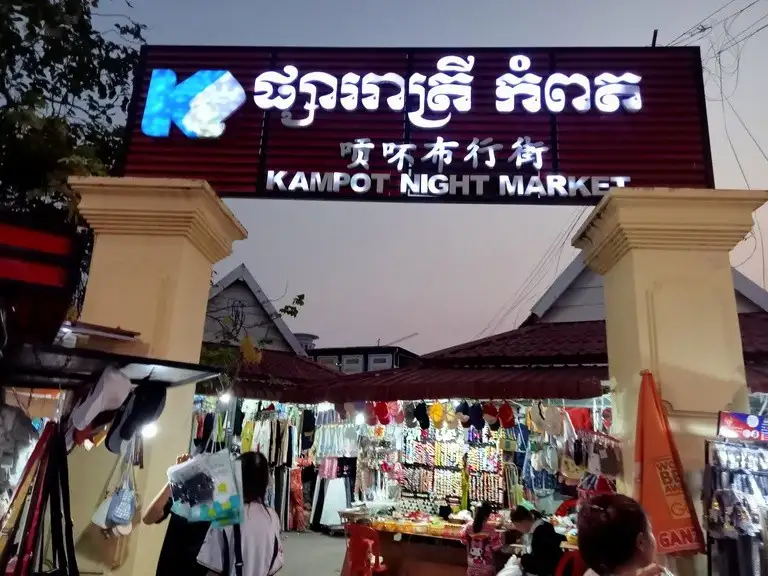
After dark, Kampot's night markets come alive, offering a completely different energy from the daytime shopping experience. The main night market near the Durian Roundabout operates every evening, transforming into a carnival-like atmosphere complete with food stalls, clothing vendors, small rides for children, and live entertainment.
The food section naturally dominates, with vendors offering everything from barbecued seafood to Khmer pizza, a unique creation that bears little resemblance to Italian versions but tastes delicious nonetheless. Fresh fruit shakes, made by blending tropical fruits with ice and condensed milk, provide refreshing relief from the evening heat. The smell of grilled corn, roasted duck, and frying snacks fills the air, making it nearly impossible to walk through without stopping to eat.
Shopping stalls sell clothing, shoes, accessories, and household goods at bargain prices. While quality varies, persistent bargaining can uncover real treasures. Local families dress up and come out for the evening, making people-watching a prime activity. Children run between stalls while parents browse and socialize, creating a festive community atmosphere that welcomes travelers to join the fun.
Small carnival rides occupy one section, including a merry-go-round, bumper cars, and a skating rink where local teenagers show off their skills. This family-friendly entertainment adds to the night market's appeal as a place where multiple generations gather to enjoy an evening out without spending much money.
Epic Arts: Shopping with Purpose
One shopping experience in Kampot transcends typical market browsing. Epic Arts Café and its associated Creations Shop operate as a social enterprise providing employment and skills training for deaf and disabled Cambodians while producing beautiful, authentic souvenirs.
The café itself serves excellent breakfast and lunch, with profits funding Epic Arts' educational and community programs. The food quality rivals any restaurant in town, featuring fresh ingredients, creative preparations, and plenty of vegetarian and vegan options. The atmosphere remains relaxed and welcoming, making it a favorite gathering spot for both locals and travelers.
Upstairs, Epic Creations shop showcases handmade items produced by students and artisans with disabilities. The selection includes jewelry, home décor, textiles, artwork, greeting cards, and specialty items like Khmicons T-shirts featuring Cambodian cultural icons. Each purchase directly supports the organization's mission of creating an inclusive society where every person counts, regardless of ability.
Shopping here provides something no typical souvenir can match: the knowledge that your purchase meaningfully contributes to positive social change. The quality exceeds mass-produced alternatives, and the stories behind each item add emotional value that transforms a simple souvenir into a treasured memory.
Artisan Workshops and Specialty Shops
Kampot's creative community has established several workshops and specialty shops worth seeking out. Atelier Kampot Pepper Artisans combines a beautifully restored 1945 Chinese shophouse with a focus on slowly matured products and design rooted in local culture. Beyond selling premium Kampot pepper, they offer cooking classes, tastings, and insights into traditional cultivation methods.
Clik Creative Lab specializes in handmade souvenirs from Kampot and throughout Cambodia, featuring items by local artisans working in traditional crafts. The selection changes regularly as new creators contribute their work, making each visit potentially reveal something different.
Several small galleries showcase local artists, many of whom draw inspiration from Kampot's natural beauty and cultural heritage. Paintings, photographs, and mixed media works capture everything from salt field landscapes to riverside scenes, pepper plantations to market life. These pieces make meaningful souvenirs that support Cambodia's developing contemporary art scene.
The Morning Rush: Timing Your Market Visit
Understanding when to visit different markets dramatically improves your experience. The Central Market reaches peak activity between six and ten in the morning. Arriving at dawn rewards early risers with the best selection, coolest temperatures, and the most authentic local atmosphere as Kampot residents conduct their daily shopping.
Fishermen arrive with overnight catches around sunrise, and the seafood section fills quickly with the freshest options. Vegetable vendors arrange their displays with morning dew still glistening on the produce. The energy level runs high as vendors call out greetings, regular customers negotiate prices, and the day's commercial life begins in earnest.
By mid-morning, the initial rush subsides slightly, making this an ideal time for leisurely exploration and photography. The crowds thin enough to move comfortably while maintaining that authentic market atmosphere. Vendors become more willing to chat when business slows, offering opportunities to learn about their products and daily routines.
Late afternoon brings a second smaller rush as people shop for evening ingredients, but selection decreases significantly compared to morning hours. The Central Market typically closes as darkness falls, with vendors packing up their remaining goods and preparing to repeat the cycle the next day.
The Old Market operates on a more relaxed schedule, with shops opening mid-morning and staying open into the evening. This makes it perfect for afternoon browsing when the heat becomes less intense and you're ready to explore in a more air-conditioned environment.
Night markets obviously only operate after dark, typically from around six or seven in the evening until ten or eleven at night. The atmosphere builds gradually as vendors set up, peaks around eight, and winds down as families with children head home.
The Art of Market Shopping and Bargaining
Approaching market shopping in Kampot requires understanding local customs around negotiation and interaction. Unlike fixed-price stores, traditional markets expect bargaining, but this process differs significantly from aggressive haggling stereotypes.
Start by browsing several stalls selling similar items to understand price ranges. Vendors typically quote an initial price slightly above what they'll ultimately accept, but contrary to common belief, Cambodian vendors rarely engage in extreme markups. A shirt actually worth five dollars might be initially offered at six or seven rather than fifteen or twenty.
Successful bargaining relies more on friendliness than aggression. Smile, engage in light conversation, express genuine interest in the products, and then gently suggest a lower price. Vendors respond far better to polite negotiation than demands or theatrical displays of outrage at prices.
Remember that the amounts being discussed often matter far more to vendors than visitors. Fighting over fifty cents or a dollar when that sum represents a meaningful portion of someone's daily income reflects poorly on travelers whose trip budget dwarfs local annual earnings. Aim for a fair price that respects both parties rather than absolute minimums.
Some items have little negotiation room, particularly perishable foods like vegetables, meat, and seafood. These products follow fairly standardized pricing, and vendors make their profit through volume rather than high margins. Fresh produce vendors might throw in an extra piece of fruit rather than lower their stated price.
Non-food items, especially clothing, accessories, handicrafts, and souvenirs, offer more bargaining flexibility. Here, starting at half the initial price and meeting somewhere in the middle often works well. Always remain willing to walk away politely if you can't reach agreement. Vendors frequently call you back with a better offer.
Beyond Shopping: Market Culture and Community
The true magic of Kampot's markets extends beyond mere commercial transactions into the realm of cultural experience and community connection. These spaces function as social centers where people exchange not just goods but also news, gossip, advice, and friendship.
Regular vendors and customers share relationships built over years or even generations. They know each other's families, celebrate together during festivals, and support each other during difficult times. As a visitor, you glimpse these connections when a vendor pauses business to chat with a friend or when customers linger after completing their purchase to share stories.
This community aspect transforms markets into living museums of Cambodian culture. The way vendors arrange their displays, how customers assess quality, the rhythm of negotiation, the methods of payment, and countless other small details reveal cultural values and practices that no guidebook can adequately explain.
Photography enthusiasts find endless opportunities in Kampot's markets, but remember that vendors and shoppers are real people conducting their daily business rather than tourist attractions. Always ask permission before photographing individuals directly, respect refusals graciously, and consider purchasing something from vendors you photograph extensively.
The sensory intensity of market environments creates lasting memories. The visual feast of colorful produce and goods, the aromatic blend of spices, grilled food, and tropical fruit, the tactile experience of examining fabrics and produce, the sounds of vendors calling out and customers negotiating all combine into an experience that engages every sense simultaneously.
Practical Considerations for Market Exploration
Successful market exploration in Kampot requires some practical preparation. Dress comfortably in lightweight, breathable clothing and wear shoes suitable for walking on sometimes uneven surfaces. Early morning visits demand warm layers as temperatures can be surprisingly cool before the sun rises fully.
Bring small bills in Cambodian riel rather than relying solely on larger US dollar notes. While dollars are widely accepted, vendors appreciate local currency and may not have change for large bills. Having exact or near-exact amounts facilitates smoother transactions and demonstrates cultural awareness.
A small backpack or shoulder bag helps carry purchases while keeping hands free for examining goods. Reusable shopping bags show environmental consciousness and prove more durable than the thin plastic bags vendors typically provide. Many local shoppers bring their own containers for certain items.
Markets can be crowded and chaotic, making them potential targets for pickpockets. Keep valuables secure in front pockets or bags worn on your chest. Avoid carrying unnecessary valuables, and maintain awareness of your surroundings without becoming paranoid. Kampot remains remarkably safe, but basic precautions make sense anywhere.
Stay hydrated, especially during morning market walks when humidity runs high even if temperatures remain moderate. Many markets have small cafes or drink vendors selling bottled water, fresh coconut water, or fruit shakes. Taking regular breaks to rest and rehydrate makes exploring more enjoyable.
Seasonal Variations and Special Occasions
Kampot's markets reflect seasonal agricultural rhythms and cultural celebrations. Certain fruits only appear during specific months, while vegetable varieties change with planting and harvest cycles. Durian season, from approximately May through August, sees the spiky fruit dominating market displays and entire streets filled with vendors selling this love-it-or-hate-it delicacy.
Pepper harvest season, running from February through April, brings increased activity at farms and pepper-focused shops. Visiting during this period allows you to see fresh peppercorns being processed and dried, adding another dimension to understanding this important local product.
Cambodian festivals transform markets into even more vibrant spaces. Khmer New Year in April, Pchum Ben in September or October, and Water Festival in November bring special foods, decorations, and a heightened festive atmosphere. Markets stay open later, stock special seasonal items, and generally buzz with increased energy as families prepare for celebrations.
Market vendors themselves celebrate these occasions, often dressing in traditional clothes and decorating their stalls. If your visit coincides with a major festival, the markets offer an incredible window into Cambodian cultural traditions and the importance of food in ritual celebrations.
Connecting Markets to Broader Kampot Experiences
Exploring Kampot's markets naturally connects to other activities that define the area's appeal. After shopping at the Central Market, rent a bicycle and ride to nearby salt fields where workers still harvest salt using traditional evaporation methods. The geometric patterns of salt pans create stunning photography opportunities while demonstrating another important local industry.
Visit one of the surrounding pepper plantations to see where that aromatic spice originates. Many farms offer free tours explaining traditional cultivation methods passed down through generations. Understanding the agricultural process deepens appreciation for the products found in markets.
The nearby Kep Crab Market, just a short ride from Kampot, represents the ultimate destination for seafood lovers. This lively waterfront market specializes in fresh-caught crabs, prawns, and fish that vendors will cook immediately in their on-site kitchens. Ordering crab with Kampot pepper sauce combines the region's two most famous products in one spectacular dish.
Kampot's riverside promenade provides the perfect setting for relaxing after market exploration. Numerous cafes and bars line the waterfront, offering cold drinks and comfortable seating where you can watch boats pass while processing the sensory overload of market visits. Many establishments serve food prepared with ingredients purchased at the morning market, completing a farm-to-table cycle that happens within just a few blocks.
Kampot Awaits Your Discovery
The markets of Kampot reveal Cambodia's soul in ways that temples and museums cannot match. Here, daily life unfolds without pretense, welcoming curious travelers who approach with respect and genuine interest. Every vendor has a story, every product connects to local traditions, and every transaction represents a small but meaningful cross-cultural exchange.
Whether you're seeking the world's finest pepper, the freshest seafood, unique handicrafts made by local artisans, or simply an authentic glimpse into Cambodian daily life, Kampot's markets deliver experiences that remain in your memory long after your visit ends. The combination of colonial charm, riverside beauty, agricultural richness, and warm Cambodian hospitality creates something truly special in this often-overlooked corner of Southeast Asia.
Ready to Experience Authentic Cambodia?
Kampot Resort provides the perfect base for your market explorations and adventures throughout this fascinating region. Located riverside with easy access to all of Kampot's attractions, we offer comfortable accommodations where you can relax after days spent discovering local markets, pepper farms, salt fields, and nearby Kep. Our knowledgeable staff can arrange transportation, recommend the best times to visit different markets, and help you plan a personalized itinerary that captures everything special about this remarkable area. Book your stay today and prepare to fall in love with Kampot's authentic charm, unforgettable flavors, and warm welcome that makes visitors feel like treasured friends rather than tourists passing through.
