
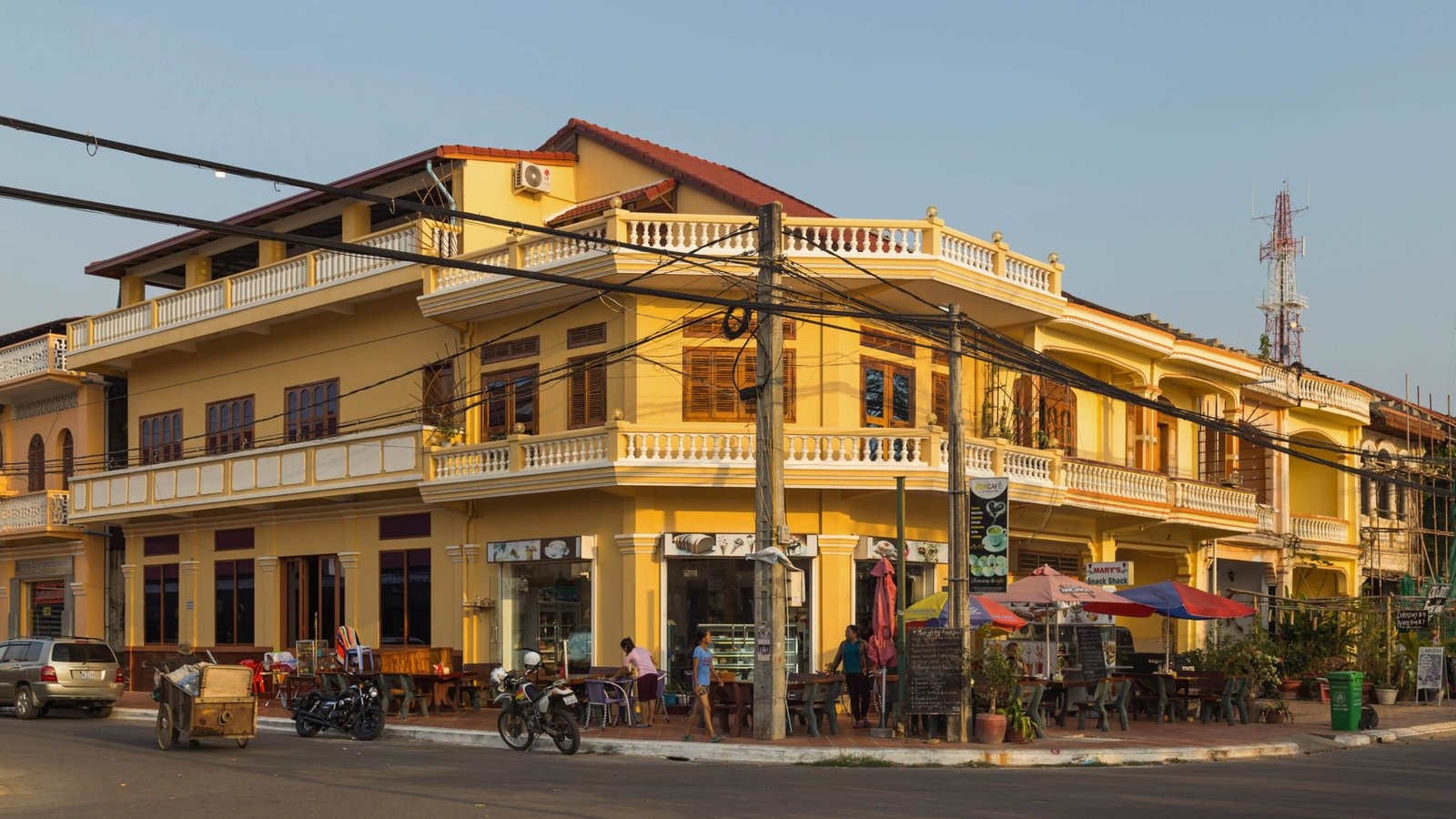
The morning sun catches the weathered shutters of an old shophouse, casting shadows across faded yellow plasterwork that hasn't changed in nearly a century. Kampot's center is, unlike most Cambodian provincial capitals, composed of 19th-century French colonial architecture, making it one of the most visually distinctive destinations in Southeast Asia. While most travelers come for the world-famous pepper or the nearby beaches, the real treasure lies in simply wandering these riverside streets where history speaks through every crumbling facade and lovingly restored balcony.
Why Kampot Preserved What Others Lost
Kampot has a larger concentration of French colonial architecture than anywhere else in Cambodia because most Cambodian cities rebuilt after the Khmer Rouge, but Kampot did not for various reasons. This accidental preservation created something extraordinary. When development finally arrived at the start of the millennium, awareness about heritage architecture had already spread, protecting these buildings from the wrecking ball that claimed so many colonial structures elsewhere.
The architecture is somewhat faded and frayed at the edges, but this is an endearing quality that preserves its small town character. The peeling paint and weathered wood aren't signs of neglect but badges of authenticity. These buildings have survived civil wars, abandonment, tropical storms, and the passage of nearly a hundred years. Each crack in the plaster tells a story.
The French Legacy Meets Chinese Commerce
Cambodia became a protectorate of France in 1863, and Kampot became a regional administrative center under French colonial administration in the 19th century. But the French weren't the first foreign influence to shape this riverside town. Early Chinese traders had a hand in developing the nascent pepper industry which French Colonials further evolved into the global industry it has become today.
This dual heritage created the unique architectural blend you see today. The shophouses that line the streets have an unmistakable French flavor but have been the lifeblood of the local Cambodian-Chinese community from both a social and professional perspective. Walk down any street in the old quarter and you'll spot Chinese grocery stores, tea rooms, and noodle shops operating from buildings with French colonial bones and Chinese commercial spirit.
Starting Your Walking Tour: The Old Governor's Mansion
The Old Governor's Mansion, which now houses the Kampot Provincial Museum, is a finely preserved French colonial-era building that traces the history of Kampot and the outlying area. This pastel yellow beauty from the 1920s serves as the perfect introduction to your architectural exploration.
The museum exhibits a series of six large panels that show important history in Kampot, along with dozens of archaeological pieces found in the region and old pictures of Bokor Mountain, the train station, old market, and old bridge. But honestly, the building itself is the main attraction. Step inside and you'll find yourself transported to another era, with heritage floor tiles, wooden shutters, and plasterwork that have been beautifully restored.
Upstairs, the house is completely deserted, just a set of dusty old rooms where staff don't seem to mind if you wander around. This abandoned upper floor offers a haunting glimpse into what many colonial buildings looked like before restoration, making it perhaps more interesting than the polished exhibits downstairs.
The Riverside Promenade: Where Colonial Meets Contemporary
The riverside promenade is lined with stately colonial buildings overlooking the tranquil waters of the Teuk Chhou River, offering a picturesque glimpse into Kampot's colonial past. This is where you'll find the highest concentration of restored colonial architecture, many now serving as boutique hotels, cafes, and restaurants.
The Columns Boutique Hotel used to be a set of shophouses when Cambodia was a French colony, retaining original features such as wooden beams, pretty tilework, and blue French colonial shutters. It's one of the finest examples of sympathetic restoration in town, where the new owners respected the building's heritage while creating comfortable modern accommodations.
The riverfront isn't just about admiring facades from afar. Many of these buildings welcome visitors into their ground-floor cafes and restaurants, where you can sit beneath century-old ceiling beams, cooled by slowly turning fans, watching the river flow past just as French administrators and Chinese merchants did decades ago.
The Old Market Area: Commercial Heart of Colonial Kampot
The Old Market building, with its art-deco-style concrete facade, was constructed during the 1930s and once served as an administrative center during the French colonial era. Today it remains a vibrant commercial hub, though the goods for sale have changed considerably from colonial times.
The streets radiating from the old market contain some of Kampot's most photogenic colonial shophouses. From graceful French villas to ornate government buildings, Kampot's architectural landscape reflects its status as a prominent colonial outpost. These two and three-story buildings typically feature covered arcades at street level, perfect for keeping the tropical sun and rain at bay while conducting business.
Look up as you walk these streets. The real architectural details live above eye level, where owners couldn't be bothered to modernize. You'll spot intricate wrought-iron balconies, decorative cornices, shuttered windows in faded blues and greens, and ornamental details inspired by both French and Khmer traditions.
The Railway Station: Where European Meets Khmer
Built during the French colonial period, the Kampot Railway Station is a striking example of colonial-era architecture featuring a distinctive blend of European and Khmer architectural styles, with ornate gables, arched windows, and red-brick facade. This building represents the best of both worlds, where French engineering met local aesthetic sensibilities.
Today, the station serves as a hub for local transportation, offering a glimpse into Kampot's past as a vital hub of the French colonial railway network. After years of abandonment, Cambodia's railway system has been partially revived, meaning you can actually arrive in Kampot by train from Sihanoukville, adding an extra layer of historical romance to your visit.
The Red Cross Building and National Bank: Institutional Grandeur
South of the old market, along the riverside, stand two of Kampot's most impressive colonial landmarks. The National Bank of Cambodia, the Kampot Provincial Museum, and the brick-colored Red Cross Kampot Branch have all been authentically restored. These buildings showcase the colonial administration's desire to project power and permanence through architecture.
The National Bank particularly deserves attention. During the Pol Pot era, the Khmer Rouge abolished currency and blew up the National Bank in Phnom Penh, making Kampot's surviving example even more significant. Its restoration involved painstaking work to preserve original features while ensuring the structure remained sound for another century.
Hidden Gems: The Chinese School
Jue Ming Chinese School, painted pink with an ornate coin roof, is impossible to miss as you walk inland from the Lotus Pond towards the Saltworkers Roundabout. This building speaks to Kampot's pluralistic heritage and the prominent role Chinese merchants played in the town's development.
The school is still in use today, which means it's a living piece of heritage rather than a museum piece. The building demonstrates how architectural preservation works best when structures continue serving their communities rather than being frozen as tourist attractions.
The Old Bridge: Patchwork History
Kampot's old French bridge was destroyed during the Khmer Rouge period and later repaired in a mishmash of styles. This frankenstein structure actually tells a more complete story than any perfectly preserved building could. The different repair materials and techniques represent different eras of Cambodia's turbulent recent history.
Walking across this bridge is the least pedestrian-friendly portion of any walking tour, as the sidewalk is very narrow and motorbikes zoom by less than a meter away. But persevere, because the view from the middle is spectacular. You'll see the riverside colonial buildings stretching along both banks, fishing boats bobbing in the current, and Bokor Mountain rising in the misty distance.
Architectural Details Worth Seeking
As you wander, look for these signature elements of French colonial architecture adapted to tropical Cambodia. Tall shuttered windows aren't just decorative; they allowed air circulation while providing shade and security. Wide covered verandas and arcades protected pedestrians from sun and sudden tropical downpours. High ceilings trapped heat at the top of rooms, keeping living spaces cooler.
Elegant facades adorned with intricate wrought-iron balconies and shuttered windows evoke the charm of 19th-century France, while ornamental details inspired by traditional Khmer motifs add a distinctive local flavor. This fusion creates something unique to Cambodia, neither purely French nor purely Khmer, but something new born from cultural exchange.
Best Times to Walk and Photograph
Early morning offers the best light for photography, when golden sun illuminates building facades while the streets remain relatively quiet. Late afternoon brings different magic as shadows lengthen and locals emerge for their evening activities. The heat between noon and three makes walking less pleasant, so plan your architectural tour for morning or late afternoon.
A walking tour through Kampot's historic streets provides insights into its rich history, and you can explore at your own pace to discover hidden gems. Most visitors find they need two to three hours to properly appreciate the architecture if they stop to photograph, peek into cafes, and read informational plaques.
Where History Meets Hospitality
Many colonial buildings now operate as boutique accommodations, allowing you to sleep within the very structures you've been photographing. Hotel Old Cinema was transformed into a great boutique hotel from the old cinema dating from the early 1950s, keeping original details like Art Deco facade in yellow and turquoise palette, columns and molding.
These conversions represent thoughtful preservation, where owners invested in restoring heritage features rather than gutting interiors for sterile modern rooms. When you book a room in one of these colonial buildings, you're directly supporting preservation efforts while enjoying an authentic experience no modern hotel can replicate.
The Living Architecture Movement
Walking tours will largely focus on history and architecture, but won't cease to observe the everyday lives of Kampot city, the living history of Kampot. This is crucial to understanding why Kampot's colonial architecture matters beyond aesthetics. These aren't museum pieces but working buildings housing real businesses and families.
Seek out locals going about their daily lives, participating in fishing boat races, scouring the riverbanks for shrimp, and youths performing live music near the main traffic circle. This vibrant street life animates the historic architecture, proving that preservation doesn't mean freezing time but adapting heritage for contemporary use.
UNESCO Recognition on the Horizon
The government and Ministry of Culture and Fine Art have been preparing documents to nominate the Old Town of Kampot for admission to the UNESCO World Heritage Site list, along with the Old Towns of Battambang and Kratie, since 2017. This recognition would bring international attention and protection to Kampot's unique architectural heritage.
The nomination process has also raised awareness among residents about the value of their historic built environment. More buildings receive sympathetic restoration each year as owners recognize that authentic colonial architecture attracts visitors and adds character that new construction can never replicate.
Practical Walking Tour Tips
Wear comfortable shoes because Kampot's sidewalks can be uneven, and you'll be walking for several hours. Bring water, sunscreen, and a hat for sun protection. Most colonial buildings photograph best from across the street where you can capture entire facades without distortion.
Download offline maps before you start because internet connectivity can be spotty. The old town is compact enough that getting lost is impossible, but knowing which building you're looking at enhances appreciation. Several local tour companies offer guided heritage walks if you want expert commentary, though independent exploration has its own rewards.
After Dark: Colonial Architecture in Evening Light
Don't pack away your camera when the sun sets. The riverside promenade stretches for miles and offers spectacular views of the Kampot River, providing a perfect vantage point for watching sunsets. As daylight fades, colonial buildings along the river illuminate, casting warm light across the water.
Evening brings cooler temperatures and locals gathering on the riverfront for socializing. Pull up a chair at a riverside cafe housed in a colonial shophouse, order a sundowner cocktail, and watch as Kampot transitions from day to night. The architecture takes on different character in artificial light, with shadows emphasizing details that disappear in harsh midday sun.
Connecting to Adventure Beyond Architecture
While colonial architecture draws history enthusiasts to Kampot, the surrounding region offers adventures for every interest. After exploring the town's built heritage, many visitors head out to experience natural wonders. The nearby river provides opportunities for kayaking, fishing, and boat trips through mangrove-lined waterways.
For those seeking more adrenaline, the region offers exciting water sports. If you're a jetski enthusiast or fancy trying quad biking through rural landscapes, you'll find excellent facilities where you can experience these thrills while staying in accommodations that respect the area's architectural heritage. The contrast between historic riverside buildings and modern adventure sports creates a unique vacation blend.
Your Turn to Discover Kampot's Architectural Soul
Kampot's center composed of 19th-century French colonial architecture represents a rare surviving example of provincial colonial town planning in Southeast Asia. Every building you pass contains stories of French administrators, Chinese merchants, Khmer families, wartime survival, and patient restoration. These aren't just pretty facades but living history that continues evolving.
Pack light, wear comfortable shoes, bring your camera, and prepare to slow down. Kampot's colonial architecture rewards those who take time to look up, peer through open doorways, sit in heritage cafes, and imagine the countless lives that have unfolded within these walls. The buildings have witnessed everything from colonial pomp to wartime destruction to peaceful rebirth, and they're still standing, still beautiful, still serving their community.
Ready to experience Kampot's colonial charm firsthand? Book your stay at a riverside property where you can wake up to river views framed by century-old architecture, spend your days exploring historic streets, and unwind with sunset cocktails on colonial-era verandas. Whether you're drawn by architectural heritage, cultural immersion, or the promise of adventure on the water, Kampot delivers an authentic Cambodia experience you won't find anywhere else. Start planning your journey to this riverside gem where every building tells a story and every street corner reveals another chapter of Southeast Asian history.
