
Southern Cambodia stands as one of Southeast Asia's most captivating birdwatching destinations, and Kampot Province serves as the gateway to some of the region's most extraordinary avian experiences. Perched dramatically on Cambodia's coastline, Kampot presents an exceptional opportunity to witness critically endangered species and endemic birds in their natural habitats, from misty montane forests to pristine wetland sanctuaries.
The Ultimate Birding Destination in Southeast Asia
Kampot Province functions as a living repository of Southeast Asian biodiversity, hosting over 670 bird species across Cambodia with several species found nowhere else in the world. The province's unique geographical position creates a natural crossroads for migratory birds along the East Asian-Australasian Flyway, while simultaneously providing permanent homes for numerous endemic and critically endangered species. This remarkable concentration of avian life transforms Kampot into a pilgrimage site for serious birdwatchers and casual nature enthusiasts alike.
The province's elevation from sea level to over 1,000 meters creates a spectacular spectrum of habitats. Coastal salt ponds and wetland marshes give way to dense evergreen forests, and eventually to the stunted montane forests that crown the mountains. This vertical gradient means that birdwatchers can experience entirely different bird communities within a single day of exploration, encountering lowland waterbirds in the morning and rare montane species by afternoon.
Bokor National Park: Where Hornbills Reign Supreme
Preah Monivong Bokor National Park, nestled within the Dâmrei or Elephant Mountains that rise dramatically from Kampot's landscape, represents the crown jewel of the province's birding circuit. The park's highest peak, Phnom Bokor, pierces the clouds at an impressive 1,081 meters, creating a natural island of cool, misty forest surrounded by the steamy lowlands. This elevation difference proves absolutely transformative for birdwatchers, as the cooler climate supports species that cannot survive in the scorching plains below.
The journey ascending to Bokor unveils nature's vertical zonation perfectly. Lowland evergreen forests gradually transition into stunted mountain forest characterized by twisted, gnarled trees draped in epiphytic orchids and mosses. The resulting ecosystem supports an astonishing array of specialized birds that have adapted to these unique conditions.
Great Hornbills and Wreathed Hornbills dominate the skyline above Bokor's highest forests. These magnificent birds, reaching up to five feet in length with enormous yellow bills crowned by distinctive casques, represent the absolute icons of Bokor's avian life. The Great Hornbill's loud, croaking calls echo through the canopy, often alerting birdwatchers to their presence before visual confirmation. These Near Threatened species require massive old-growth trees for nesting, and their presence indicates healthy forest conditions.
Beyond the hornbills, Bokor's key species list reads like a dream for any serious birder. Chestnut-headed Partridges, a near-endemic species found almost exclusively in the mountains of southern Cambodia and adjacent Thailand, shuffle through the forest floor in small coveys, their distinctive calls piercing the understory. Silver Pheasants with their striking white and black plumage occasionally emerge from dense thickets, though their cryptic nature makes them frustratingly difficult to spot. Long-tailed Broadbills, jewels of emerald green with absurdly long tails, feed in mixed species flocks through the mid-story vegetation.
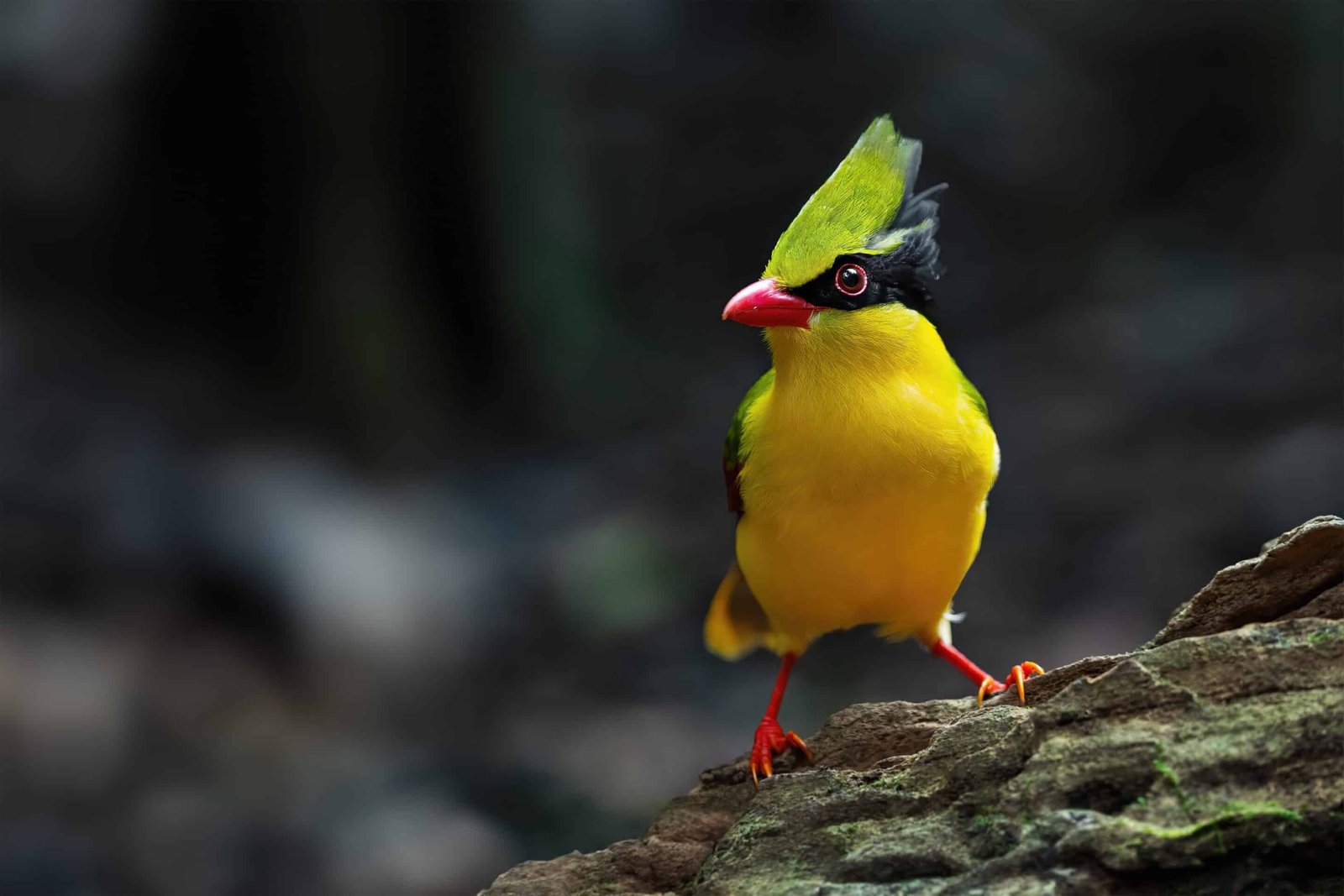
The park checklist encompasses over 150 bird species, including specialists like Indochinese Green Magpies with their brilliant emerald plumage, Blue-bearded Bee-eaters that dart between branches, and the Moustached Barbet with its comical facial markings. Mountain Hawk-eagles, among the world's largest raptors, occasionally soar above the escarpment with their distinctive silhouette.
Anlung Pring: Ancient Wetlands and the World's Tallest Flying Birds
While Bokor offers montane forests, Anlung Pring Sarus Crane Reserve presents an entirely different birdwatching experience, showcasing Cambodia's critically important wetland ecosystems. Located in Kampong Trach district within the western edge of the Mekong delta region, this 217-hectare sanctuary preserves some of Cambodia's last seasonally inundated grasslands. Designated as an Important Bird Area and Cambodia's second Sarus crane reserve in 2011, Anlung Pring represents one of the few remaining strongholds for one of the world's most magnificent birds.
The Sarus Crane, standing nearly five and a half feet tall when fully extended, claims the title of the world's tallest flying bird. These striking creatures, with their brilliant red heads contrasting against grey plumage, migrate to Anlung Pring from their breeding grounds in northern Cambodia between mid-November and early May, precisely during the optimal birdwatching season. Visitors can often approach within 100 meters of these spectacular birds, offering unparalleled photographic opportunities and unforgettable wildlife encounters.
The Sarus Crane's ecological importance extends far beyond its impressive stature. These birds serve as flagship species for wetland conservation, as their presence indicates healthy wetland habitats that support hundreds of other species. When crane populations flourish, it signals that the entire ecosystem thrives. Conversely, crane declines reflect broader environmental degradation that threatens innumerable wetland species.
Beyond cranes, Anlung Pring provides crucial habitat for shorebirds and waterbirds that few other sites in Cambodia can match. Red-necked Stints, Broad-billed Sandpipers, Lesser and Greater Sand-plovers, and Kentish Plovers congregate in significant numbers during migration periods. Marsh Sandpipers, Glossy Ibises, and Oriental Darters frequent the deeper water areas, while Painted Storks and Spot-billed Pelicans visit during optimal conditions. The diversity reflects Anlung Pring's role as an international stopover for birds traversing the East Asian-Australasian Flyway.
Coastal Salt Ponds: Hidden Jewels of Shorebird Habitat
Kampot's renowned salt production, which has defined the region's economy for centuries, creates an unexpected birdwatching opportunity. The extensive salt ponds around Chum Kriel attract over twenty shorebird species that concentrate in these shallow water habitats. During high tide periods, these salt ponds function as crucial roosts where shorebirds rest before dispersing to feed on adjacent intertidal flats.
The salt ponds' productive waters support rich invertebrate populations that attract countless shorebirds. Red-necked Stints and Long-toed Stints probe the shallow water and mudflats methodically, while larger Marsh Sandpipers and Greenshanks wade through deeper sections. Lesser and Greater Sand-plovers rest on the drier margins, their cryptic plumage providing perfect camouflage against the pale salt crystals. The mosaic of salt production areas, aquaculture ponds, mangroves, and intertidal flats creates a complex habitat network that supports this remarkable diversity.
Birdwatchers visiting Kampot can observe salt farming practices while simultaneously tracking shorebirds, creating a unique cultural-natural experience. Local salt farmers, many of whom harvest the prized Kampot Flower of Salt during the warmest months of April and May, have become increasingly aware of the ecological value of their ponds and sometimes support small-scale ecotourism ventures.
The Cardamom Mountains Connection: Endemic Species and Conservation Success
The broader Cardamom and Dâmrei mountain system, which includes Bokor, represents one of the world's truly exceptional biodiversity hotspots. This ancient mountain system, receiving up to 200 inches of annual rainfall on its western slopes, has preserved unique species that survived the vast environmental changes that transformed Southeast Asia. The mountains contain at least three endemic bird species found nowhere else on Earth: the Cambodian Tailorbird, Cambodian Laughingthrush, and the near-endemic Chestnut-headed Partridge.
The Green Peafowl, one of Southeast Asia's rarest galliforms, inhabits the Cardamom system including areas accessible from Kampot. This stunning relative of the Indian peafowl, with males displaying iridescent green and gold plumage, has declined catastrophically throughout its range due to habitat loss and hunting. The mountains provide increasingly critical refuge populations that conservation organizations work tirelessly to protect.
The presence of these endemic and near-endemic species underscores the evolutionary uniqueness of the region. The mountains essentially function as a time capsule, preserving bird species and forest types that have essentially disappeared elsewhere in mainland Southeast Asia. This makes every birdwatching visit to Kampot a potential contribution to conservation understanding and support.
Seasonal Rhythms: When to Experience Kampot's Bird Paradise
The timing of a Kampot birding adventure profoundly influences the species list and viewing conditions. The dry season, spanning November through March, dominates birdwatchers' calendars and for excellent reasons. During these months, sunny skies, minimal rainfall, and comfortable temperatures create ideal conditions for hiking forest trails and boating across wetlands. Roads remain passable, and accessibility to remote sites improves dramatically.
More significantly from an ornithological perspective, the dry season coincides with peak arrival of migratory species and optimal concentrations of wintering birds. Sarus Cranes reach Anlung Pring by mid-November and remain until early May, with maximum populations between December and February. Shorebirds concentrate in coastal areas, waterbirds gather in shrinking wetlands, and resident species maintain predictable daily routines that facilitate finding and observing them.
However, the green season, from May through October, offers entirely different rewards for adventurous birdwatchers willing to negotiate muddy trails and afternoon downpours. The forests transform into impenetrable walls of vibrant green vegetation. Many resident birds engage in breeding behaviors, with males calling vigorously to establish territories and attract mates. The symphony of bird vocalizations intensifies dramatically, making the green season exceptional for sound-recording enthusiasts and auditory birders.
August specifically gains recognition among expert birdwatchers as an exceptional time for wetland birding. The Tonle Sap Lake, Cambodia's massive freshwater wetland system located northwest of Kampot, enters its critical breeding season, drawing endangered waterbirds in staggering concentrations. Visitors interested in experiencing Cambodia's rarest waterbirds—species like the Giant Ibis and White-shouldered Ibis—often coordinate multi-site tours combining Kampot's offerings with visits to these wetland strongholds.
Beyond Common Birds: Critically Endangered Species
While Bokor and Anlung Pring offer excellent chances for uncommon birds, serious birders often travel to Kampot as part of comprehensive Cambodia tours specifically targeting the country's most critically endangered species. The province's geographic position provides launching points for expeditions to sites hosting globally significant populations.
The Giant Ibis, Cambodia's national bird and one of the world's rarest birds with fewer than 300 individuals remaining globally, represents the ultimate target for dedicated birdwatchers. This colossal wading bird, reaching five feet in length, was believed extinct for over fifty years before its rediscovery in 1993. Nearly 99 percent of the global population inhabits Cambodia, making the country the absolute center of Giant Ibis conservation. While the primary viewing site requires travel to Tmat Boey in Preah Vihear Province, serious birders planning Cambodia trips often route through Kampot to experience the province's own specialties while preparing for trips to these even rarer species.
Similarly, the White-shouldered Ibis, another critically endangered species with fewer than 700 individuals remaining globally, represents a conservation priority. Around 85 to 95 percent of the global population inhabits Cambodia. Kampot's position near border regions sometimes offers opportunities for birdwatchers to hear about recent sightings and connect with expert guides who track these species.
The Bengal Florican, a critically endangered large grassland bird, maintains small populations in Cambodia's grasslands. This spectacular bird, with males displaying brilliant blue-black plumage, once ranged across India, Southeast Asia, and Southeast China but has declined to perhaps 500 individuals globally. Cambodia hosts more than half the world's remaining population, and expert guides sometimes incorporate Bengal Florican viewing into comprehensive Kampot-based birding tours.
Practical Considerations for Maximizing Your Kampot Birding Experience
Successful birdwatching in Kampot requires preparation and appropriate equipment. Quality optics transform the experience—high-quality binoculars with good optics and proper magnification enable positive species identification from safe distances. Several professional birding tour operators based in Kampot provide world-class Swarovski Optik binoculars and spotting scopes to visitors, removing equipment limitations from the equation.
Early morning emergence remains absolutely essential for productive birdwatching. Birds vocalize most actively immediately after dawn and often retreat to dense cover once the sun climbs high. The best birdwatchers schedule their days to be in prime birding habitat from before sunrise through mid-morning, then potentially return for an evening session before sunset. This rhythm aligns with bird behavior perfectly, maximizing encounter rates.
Local guides provide invaluable benefits that extend far beyond simple logistics. Expert Cambodian birding guides possess intimate knowledge of where specific species congregate seasonally, understand the forest's acoustic landscape so thoroughly that they identify birds by call alone, and navigate complex conservation arrangements at various protected areas. They often share deeper cultural and ecological knowledge about the region, enhancing the experience immeasurably.
Appropriate clothing adapts to rapidly changing mountain conditions. Layers prove essential, as Bokor's summit can feel refreshingly cool while Kampot's coast swelters. Waterproof jackets handle sudden afternoon downpours. Sturdy hiking boots with excellent grip navigate muddy forest paths and rocky mountain trails, preventing slips and injuries. Comfortable walking shoes suffice for salt pond areas and flat wetland trails.
Binoculars require binocular straps for comfort and security—a full day of birdwatching means carrying optics for hours. Comfortable straps prevent neck strain while reducing the risk of accidentally dropping expensive equipment. Field guides specific to Cambodian birds prove more useful than broader Southeast Asian guides, as they focus identification on the regional species actually encountered.
Sun protection extends beyond casual beach concerns. Even on overcast days, ultraviolet radiation penetrates cloud cover and can cause serious sunburn, particularly given the equatorial latitude. Sunscreen, wide-brimmed hats, and lightweight long sleeves protect skin while maintaining visibility for birdwatching. Insect repellent becomes essential in forested areas, particularly after rainfall when mosquito populations surge.
Integration with Kampot's Broader Appeal
Birdwatching seamlessly integrates with Kampot's other attractions, allowing visitors to balance nature experiences with cultural immersion. The charming coastal town itself preserves colonial architecture from its pepper-trading past, with elegant French-influenced buildings now converted into boutique hotels and restaurants. The famous Bokor Hill Station, abandoned during Cambodia's civil war, operates as a historic site with temples and dramatic clifftop viewpoints alongside birdwatching opportunities.
Local cuisine reflects the coastal and agricultural heritage, with fresh seafood, traditional Khmer dishes, and internationally adapted fare. Several properties consciously support conservation efforts, with portions of proceeds funding wildlife protection initiatives. This alignment of hospitality with conservation creates positive incentives for maintaining healthy bird populations and habitats.
The combination of world-class birdwatching, cultural exploration, relaxing coastal living, and conservation-oriented tourism makes Kampot an ideal base for extended stays. Visitors can distribute their time across early-morning forest expeditions, midday relaxation or cultural exploration, and evening nature walks or dining experiences, creating a balanced itinerary that satisfies multiple interests.
Your Kampot Birding Adventure Awaits
Kampot Province represents far more than simply another birding destination—it embodies a living landscape where conservation science meets authentic biodiversity, where critically endangered species find refuge, and where dedicated birdwatchers can experience Southeast Asia's natural wonders at their finest. Whether you're pursuing specific target species like the Sarus Crane and rare Hornbills, or simply seeking immersion in one of the world's most biodiverse regions, Kampot delivers an unforgettable experience.
Plan your visit during the optimal November-to-March dry season when conditions align perfectly, engage experienced local guides who understand the landscape intimately, and prepare yourself mentally for the simple magic of encountering wild birds in their natural habitat. Your binoculars might reveal a stunning Great Hornbill soaring above Bokor's misty forests, or your early morning efforts could yield a breathtaking view of world's tallest flying birds gathering at Anlung Pring's wetlands.
Discover Kampot's extraordinary bird life today—explore birdwatching tours and specialized birding packages that showcase the province's rarest species, and become part of the conservation community protecting these spectacular birds for future generations.
