
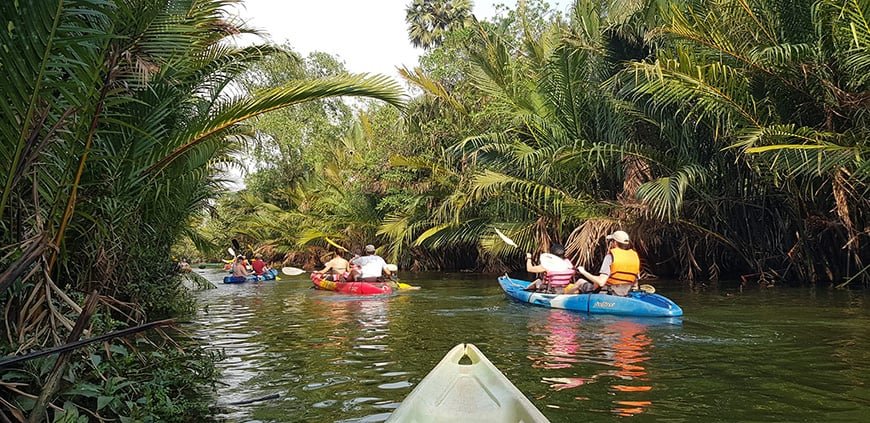
The Teuk Chhou River winds through Cambodia's south coast like a liquid ribbon of adventure, offering one of Southeast Asia's most underrated water experiences. While travelers flock to Thailand's crowded beaches or Vietnam's bustling waterways, those who discover Kampot's river system find something infinitely more valuable: peace, authenticity, and a natural playground that feels like their own private discovery.
Why Kampot's River System Stands Apart
Kampot sits on the Praek Teuk Chhu River, southeast of the Elephant Mountains, positioned perfectly where freshwater meets the Gulf of Thailand. This unique geographical position creates an estuarine environment that changes personality with the tides, making every paddle different from the last.
The Tuek Chhou River winds past small palm-fringed islands, mangrove forests and traditional hamlets and fishing villages under the shadow of Bokor National Park, creating a paddler's paradise that combines natural beauty with cultural immersion. Unlike ocean kayaking where you battle waves and currents, or lake paddling where scenery remains static, river kayaking in Kampot offers constantly evolving landscapes framed by dramatic mountain backdrops.
The river's calm waters make it accessible for beginners while offering enough variety to keep experienced paddlers engaged. During dry season, the current moves gently downstream, allowing effortless exploration. When monsoon rains swell the waterway, the river gains character and energy without becoming dangerous for those who respect its power.
The Green Cathedral Experience
Every kayaker who explores Kampot eventually discovers its crown jewel—a mangrove-lined section locals call the Green Cathedral. This natural tunnel of vegetation creates an otherworldly atmosphere that feels more like exploring an enchanted forest than paddling a river.
The most popular route for casual kayakers is an offshoot of water 5km upstream from the centre of town which is known as the Green Cathedral, named after the dense foliage stretching from bank to bank, which takes between one and two hours to complete. The name couldn't be more fitting—as you paddle beneath the interlocking canopy, sunlight filters through leaves creating cathedral-like beams that dance on the dark water.
This stretch of waterway is particularly good for early morning bird watching, and spotting other wildlife including dragonflies and waterfowl. Kingfishers dart between overhanging branches, their blue-green plumage flashing brilliantly against the foliage. Egrets stand motionless in the shallows, waiting for unsuspecting fish. The air fills with bird calls that echo off the water, creating a natural symphony that drowns out any memory of city noise.
The Green Cathedral rewards early risers most generously. Launch your kayak at dawn when morning mist still clings to the water's surface, and you'll experience this magical waterway in its most ethereal state. The cool morning air, the stillness before the heat of day, and the wildlife at their most active combine to create memories that linger long after you've returned to shore.
Planning Your River Adventure
The beauty of Kampot's river lies partly in its accessibility. Unlike remote destinations requiring expedition-level planning, kayaking the Teuk Chhou River fits seamlessly into any traveler's itinerary without demanding specialized equipment or expert-level skills.
Most riverside guesthouses and accommodations provide kayaks free for guests or rent them at minimal cost to visitors. This democratic approach to river access means you don't need to book expensive tours or join large groups—though guided experiences certainly have their place for those seeking deeper cultural or ecological insight.
Kampot town offers a wide range of backpacker hostels, riverside resorts and boutique hotels where you can base yourself while you take in the French architectural legacy, explore the pretty river by paddleboard or kayak. At Queen Island, we embrace this river culture completely. Located on the scenic Stung Sangke River with direct water access, guests enjoy complimentary canoe use included with their stay. There's something special about waking up on an island, stepping directly from your accommodation into a kayak, and disappearing into nature without any middlemen or complicated logistics.
Timing matters less than you might think. Kampot's tropical climate means kayaking happens year-round, though each season offers distinct experiences. Dry season (November through April) provides guaranteed sunshine and consistently calm conditions—perfect for photography and leisurely exploration. Rainy season (May through October) brings lush greenery, fuller riverbanks, and occasional dramatic cloud formations that create moody, atmospheric paddling conditions.
Wildlife Encounters Along the Waterway
The Teuk Chhou River ecosystem supports remarkable biodiversity for a waterway so accessible to human visitors. Paddle quietly and you'll witness nature going about its business with barely a glance at your intrusion.
Water monitors—massive lizards that can exceed six feet in length—sun themselves on muddy banks or swim across the river with surprising grace. Despite their dinosaur-like appearance, they're harmless to kayakers, more interested in fish and carrion than human interaction. Watch them closely and you'll appreciate their unexpected elegance.
The river's fish population supports not just wildlife but local communities who've fished these waters for generations. Traditional fishing methods remain common—nets stretched across narrow channels, bamboo fish traps designed with ingenious simplicity, and wooden boats that have changed little over decades. These fishermen often wave or exchange greetings with passing kayakers, creating human connections that enrich the experience beyond just scenery.
Mangrove sections teem with mudskippers—bizarre fish that actually climb out of water and "walk" on mudflats using modified fins. Their bulging eyes and comical hopping movements never fail to entertain, while their presence indicates healthy estuary ecosystems. These transitional zones where fresh and saltwater mix support unique species found nowhere else.
Cultural Connections From Your Kayak
Paddling the Teuk Chhou River isn't just about nature—it's about witnessing rural Cambodian life from a unique perspective. Unlike road travel where you pass through communities as an obvious outsider, approaching by water creates different dynamics and reveals aspects of local life hidden from highway tourists.
Historically, there has been a noteworthy presence of Cambodians of Chinese descent in Kampot, and the river reflects this cultural diversity. Floating houses and riverside communities show architectural influences from multiple traditions, creating a visual tapestry that tells Cambodia's multicultural story.
Small villages dot the riverbanks, their stilt houses rising from the water like wooden ships at permanent anchor. Children play in the shallows, waving enthusiastically at passing kayakers. Women wash clothes or dishes at river's edge, continuing daily routines that connect directly to the waterway. Men repair fishing nets or work on boat maintenance, their craftsmanship evident in weathered hands that have known only this life.
The Cham Muslim community maintains a significant presence along certain stretches, their mosques visible from the water and their fishing boats distinctive in design. These communities welcome respectful visitors and sometimes share fruit or snacks with kayakers who stop to rest and chat—though a few words of Khmer or respectful gestures go far when language barriers exist.
Extended Exploration for Experienced Paddlers
While the Green Cathedral satisfies most casual kayakers perfectly, those seeking greater challenges and more remote experiences can venture further upstream where the Teuk Chhou reveals its wilder character.
For more advanced kayakers here is a longer kayaking route that takes you further afield to the Pagoda Lagoon, and a more technical section at the Teuk Chhou rapids further upstream. These rapids occur where the river descends from higher elevations, creating white water sections that demand respect and proper technique. While not extreme by international standards, they provide enough excitement to quicken your pulse and test your paddle skills.
The journey to Teuk Chhou Rapids covers approximately 8-9 kilometers from Kampot town, passing through increasingly rural landscapes where river life dominates everything. You'll paddle past small farms where water buffalo stand knee-deep in rice paddies, their massive forms silhouetted against mountain backdrops. Temples appear occasionally, their colorful roofs and ornate spires creating focal points that guide navigation.
This extended route typically requires 4-6 hours depending on current conditions and how often you stop to explore, photograph, or simply absorb the scenery. Pack water, sun protection, and snacks—upstream sections offer fewer convenient stopping points compared to areas closer to town. The reward for this extra effort comes in solitude and authenticity that decrease with every kilometer you paddle beyond casual tourist range.
Seasonal Considerations and Water Conditions
Understanding Kampot's seasonal patterns helps maximize your river experience. While kayaking happens year-round, each period offers distinct advantages that appeal to different traveler preferences.
The average temperature is about 27 degrees Celsius, with December and January the coolest months, whereas the hottest is April. These cooler months coincide with peak kayaking conditions—lower water levels create clearer visibility for spotting fish and aquatic life, while comfortable temperatures make extended paddling sessions pleasant rather than exhausting.
Kampot itself is one of the cooler regions of the country, due to its situation next to the sea and high rainy mountains its cooler and fresher. This geographical blessing means even hot season kayaking remains tolerable, especially during early morning or late afternoon sessions when temperatures moderate and light becomes magical for photography.
Rainy season transforms the river dramatically. Water levels rise, sometimes significantly, changing the landscape and revealing features invisible during dry months. The increased flow adds gentle current that experienced kayakers enjoy, while still maintaining safety for those who respect conditions and don't push beyond their abilities. Vegetation explodes in lush greens, waterfalls appear on distant mountainsides, and the air carries the fresh smell of rain-washed jungle.
Combining Kayaking With Kampot's Other Attractions
The genius of basing yourself in Kampot lies in how easily kayaking integrates with the region's other compelling attractions. Rather than choosing between activities, you can experience them all from a single comfortable base.
The area supplies most of Cambodia's salt needs from state-owned salt marshes along the Gulf of Thailand coast. Kampot is renowned for its agricultural products, including pepper, rice, bananas, coconuts, durians, and fish sauce. After morning kayaking, visit a pepper plantation to understand why Kampot pepper achieves cult status among international chefs. The contrast between water-based morning tranquility and afternoon exploration of spice-scented farms creates perfect daily rhythm.
The region and town are known for high-quality pepper, which is exported worldwide. It is also known for its fish sauce, sea salt, and durian. Sample these products at local markets where vendors enthusiastically explain differences between green, black, red, and white peppercorns, or where fish sauce production follows centuries-old methods that create complex flavors impossible to replicate industrially.
Bokor National Park looms over Kampot, its misty heights visible from the river. After kayaking through lowland waters, ascend to this mountain realm where cooler temperatures and abandoned French colonial buildings create an entirely different atmosphere. The contrast between these experiences—river serenity followed by mountain exploration—showcases Kampot's geographic diversity within remarkably compact territory.
Safety Considerations and River Etiquette
Kayaking the Teuk Chhou River ranks among Southeast Asia's safest water activities, but respecting basic precautions ensures everyone's experience remains positive.
Life jackets should be worn regardless of swimming ability—not because the river presents serious danger, but because unexpected situations occur and preparation prevents problems. Most rental operators provide life jackets; if yours doesn't, request one or find a different provider who takes safety seriously.
River traffic exists but remains light compared to busier Southeast Asian waterways. Watch for longtail boats, especially during evening hours when fishing boats return to port. Give them wide berth—their engines create wakes that can surprise kayakers not paying attention, and their propellers demand respect in shallow sections where everyone shares limited space.
Sun protection matters enormously. Cambodia's tropical sun punishes exposed skin mercilessly, and water reflection intensifies its effects. Waterproof sunscreen, a hat that won't blow away, and long-sleeve sun shirts create comfortable paddling conditions without the painful sunburn that ruins the following days.
Environmental responsibility should guide every paddle stroke. The Teuk Chhou remains pristine partly because locals and visitors alike protect it. Never discard trash in the river—if you brought it in, bring it out. Avoid disturbing wildlife, keep noise levels reasonable especially near residential areas, and respect private property along riverbanks even when stopping points seem convenient.
Why Now Is the Perfect Time
Kampot has seen an increase in tourism since the 2010s and has become an increasingly popular tourist destination, yet it hasn't crossed that threshold where popularity ruins authenticity. The balance remains perfect—enough infrastructure exists to support comfortable exploration without the crowds that transform destinations into theme parks.
The river sees steady kayaker traffic without congestion. You'll encounter other paddlers occasionally, creating opportunities for friendly waves or quick conversations about route recommendations, but long stretches of solitude remain easily accessible. That sweet spot won't last forever as word spreads about Kampot's charms.
Infrastructure improvements make access easier than ever. There's a new road to Bokor and development of a port worth US$8 million under the Kampot Provincial Tourism Department's master plan. Better roads mean easier arrival, while maintained facilities ensure comfortable stays that don't sacrifice adventure for convenience.
The river itself remains pristine despite increasing visitation—a testament to both environmental awareness and sustainable tourism practices that Kampot is developing more thoughtfully than many destinations. Local communities benefit from tourism without becoming overwhelmed by it, creating mutually beneficial relationships between visitors and residents.
Your River Journey Awaits
Kayaking the Teuk Chhou River delivers exactly what modern travelers increasingly crave: authentic experiences in beautiful settings without the crowds, complications, or compromises that plague so many destinations. It's adventure without extreme difficulty, cultural immersion without language barriers becoming obstacles, and nature connection without requiring expedition-level preparation.
Whether you paddle the Green Cathedral at dawn, venture upstream to wilder sections, or simply drift lazily while watching village life unfold along the banks, the Teuk Chhou River rewards everyone who embraces its gentle rhythms. The river asks only that you slow down, pay attention, and appreciate the privilege of accessing such pristine beauty so easily.
From Queen Island's shores, we watch kayakers depart each morning with anticipation in their eyes and return each afternoon with satisfaction written across sun-touched faces. That transformation—from arrival to departure, from expectation to experience—never gets old. The river works its magic reliably, generously, and mysteriously on everyone who accepts its invitation.
So grab a paddle, push away from shore, and discover why Kampot's river remains one of Southeast Asia's best-kept secrets. The Teuk Chhou River flows patiently, waiting to share its beauty with those wise enough to seek it out. Your perfect paddle awaits in Kampot's welcoming waters.
Ready to Experience Kampot From the Water?
At Queen Island, we're located right on the river system that makes Kampot famous, with complimentary canoes included for all guests. Wake up on your own private island, step directly into your kayak, and disappear into the waterways that make this region magical. With the Green Cathedral, fishing villages, and endless exploration possibilities just minutes from our shores, your river adventure begins the moment you arrive.
Contact us today to reserve your island escape and discover why paddling the Teuk Chhou River might become your favorite Southeast Asian experience. The river is calling—will you answer?
